How U.S. news covered the 2026 World Cup


.jpg)
The FIFA World Cup first came to North America in 1970, when Mexico hosted and Brazil, led by Pelé, won the title. Mexico hosted again in 1986 and the United States in 1994, but 2026 is the first World Cup co-hosted by three countries: the United States, Canada, and Mexico. We used the Anoki Live News engine to analyze every second of coverage across national and local news channels during the tournament.
01 — The month the World Cup took over
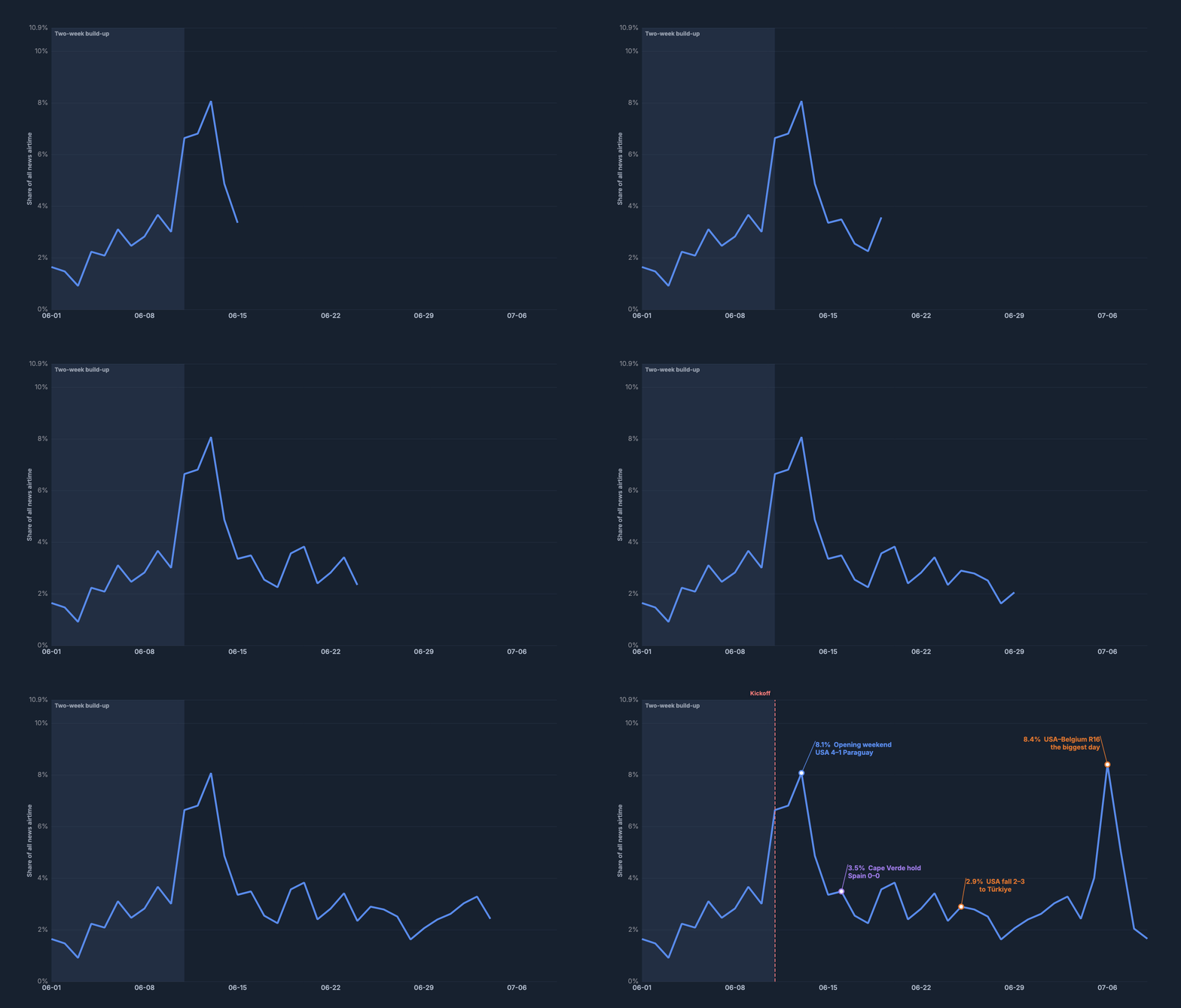
Coverage rose gradually over two weeks of build-up and jumped sharply at kickoff. Each subsequent stage of the tournament produced its own spike: the co-hosts’ opener, Cape Verde’s draw with Spain, Norway’s win over Brazil, and Team USA’s knockout run. The USA–Belgium round-of-16 match, which involved a red-card controversy, produced the tournament’s single largest coverage day. At its peak, daily coverage was roughly four times the pre-tournament average, and kickoff alone approximately doubled it.
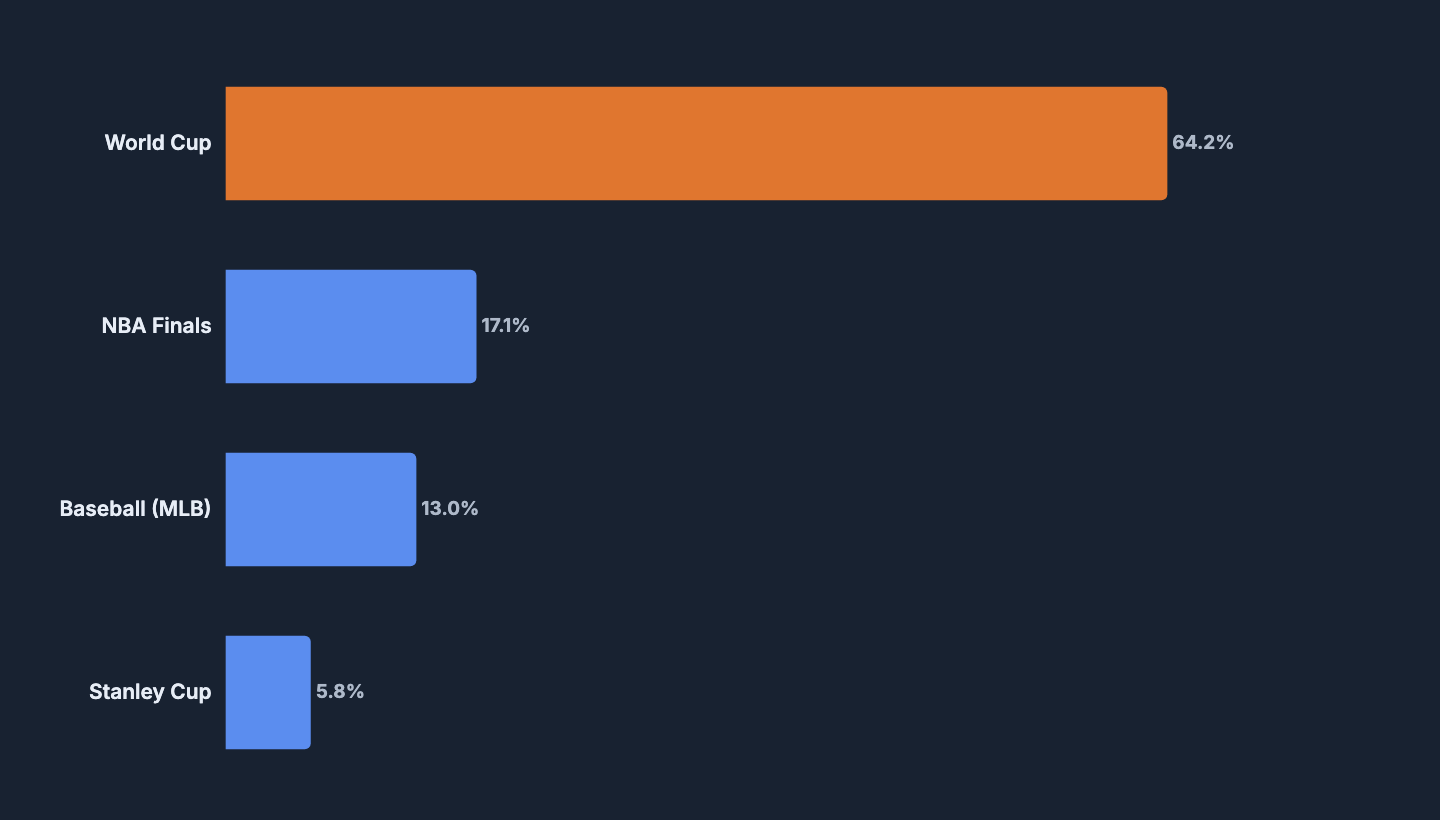
Across the month, the World Cup was the most-covered sport on U.S. news, ahead of the NBA Finals and Major League Baseball.
02 — Team USA matches drove the largest daily spikes
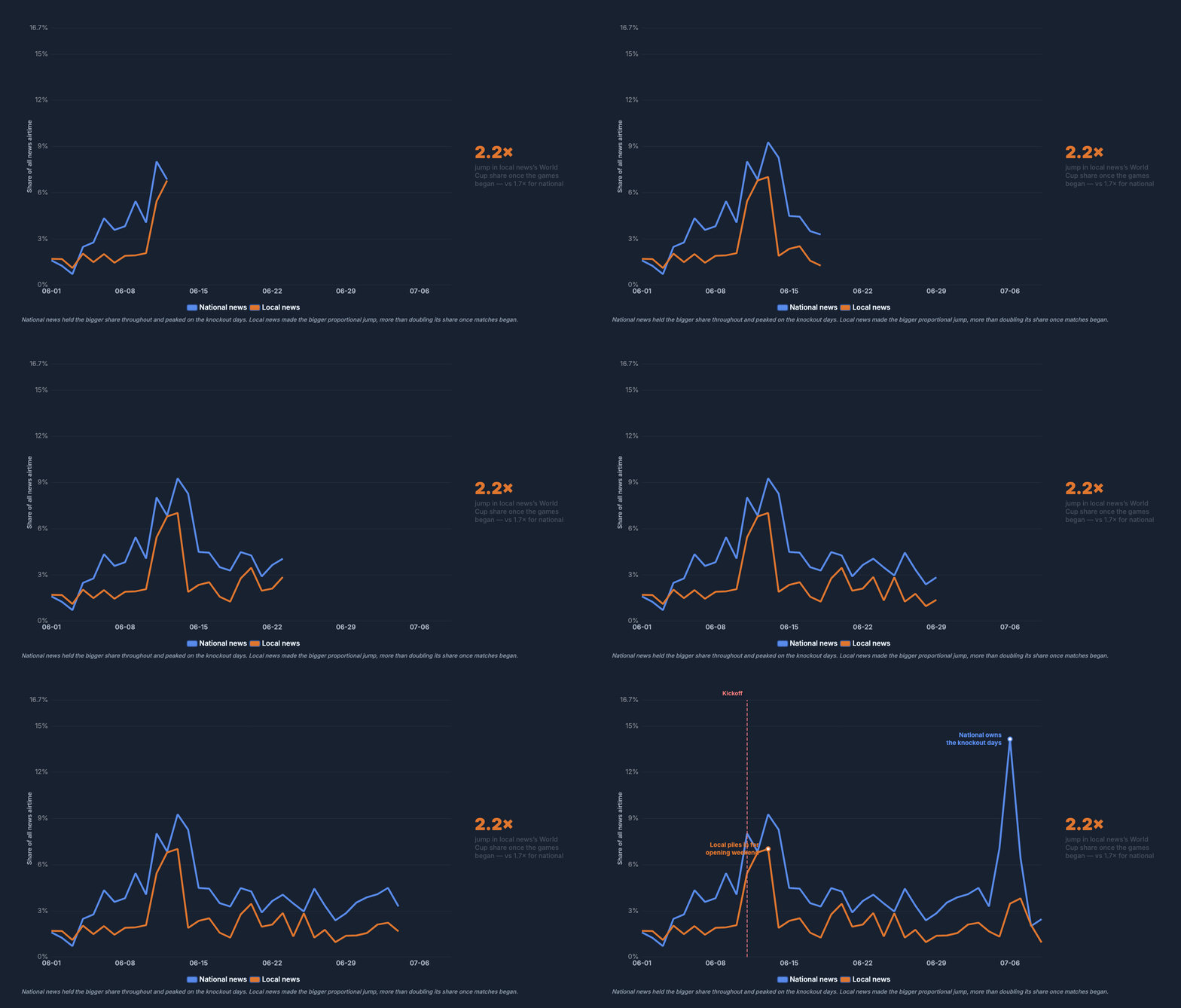
The tournament dominated sports coverage across the news. As expected, national news carried a greater share than the local channels throughout the tournament. Local coverage, however, grew faster once the tournament actually started.
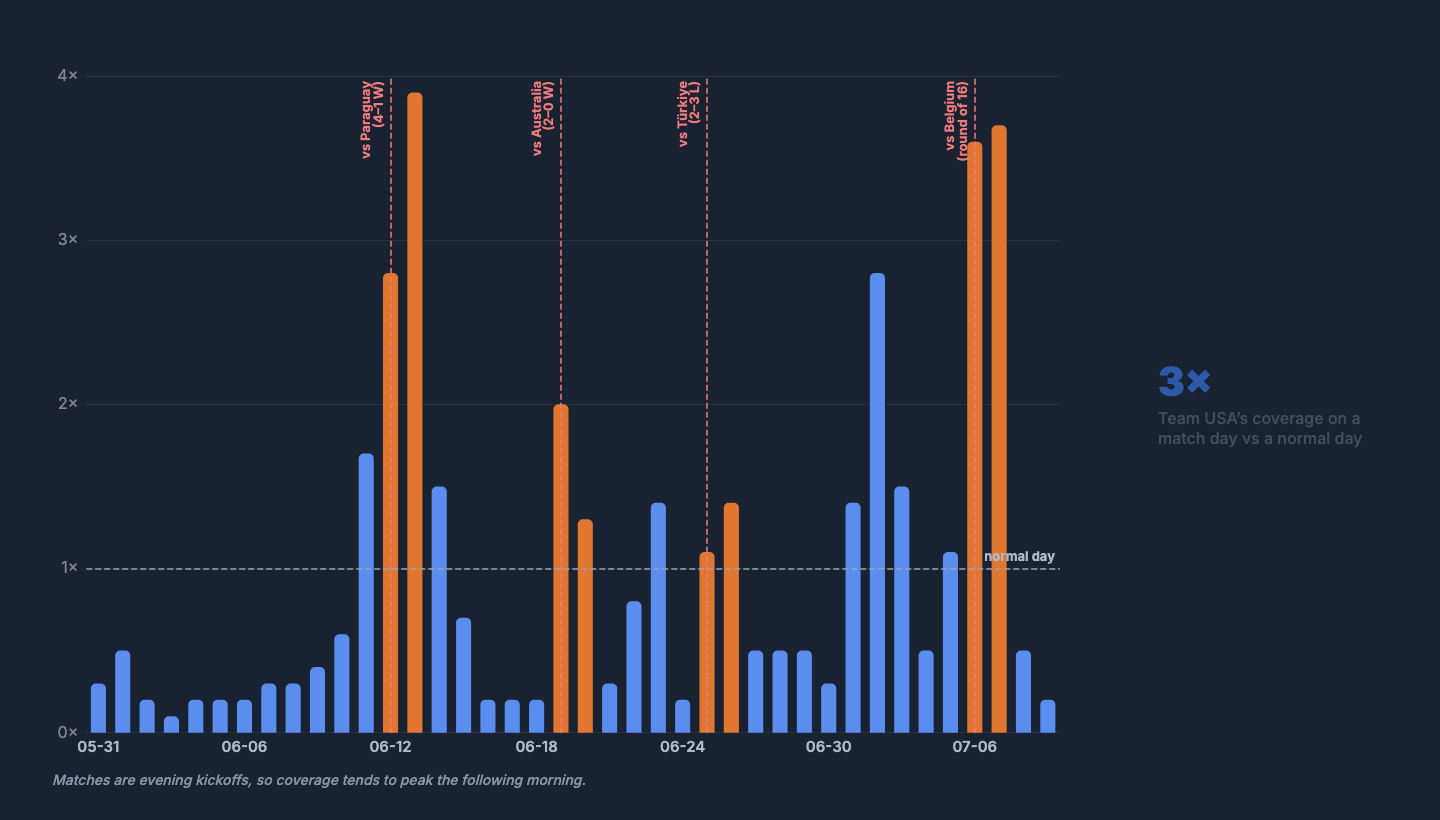
National and local channels split on how much they covered the tournament, but they moved together on when. The biggest daily spikes tracked Team USA’s own matches: every U.S. game had the news channels talking, analyzing, and discussing the result, and a single match day drew about three times the team’s normal coverage.
03 — Coverage ranked teams by airtime, not results
Team USA drove the biggest spikes, but it was still one team among many competing for attention. Rank every team by hours of coverage instead of by results, and the standings look nothing like the ones on the field.
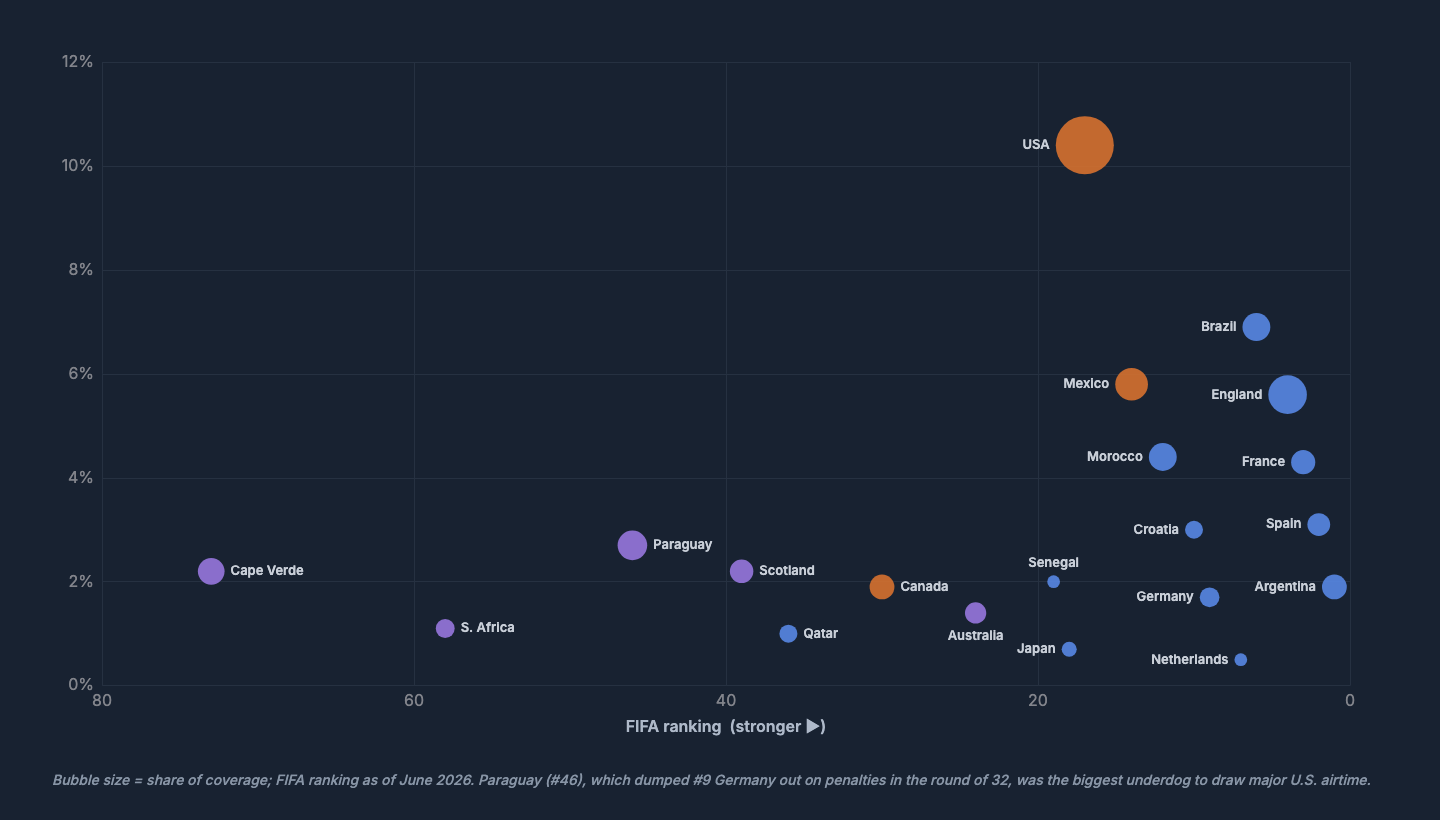
At the top, Team USA led all teams and England ranked second, boosted by its match against co-host Mexico. Below that, coverage primarily tracked U.S. involvement. Belgium jumped into the top five after its round-of-16 tie with Team USA and the Balogun red-card controversy becoming the tournament’s biggest news day so far. Paraguay ranked high mainly for opening against the U.S., with nearly six in ten of its World Cup mentions also mentioning the United States. Even among hosts the pattern held: Canada barely registered once the “United States, Mexico and Canada” boilerplate is set aside, while co-host Mexico drew far more.
Overall, coverage showed little relationship to teams’ FIFA rankings. Host nations and underdogs drew the most coverage; higher-ranked teams generally received less.
Argentina shows this most directly. It was FIFA’s top-ranked team and the side of Messi, the single most-covered person of the whole tournament, yet it ranked only 10th in coverage, behind Cape Verde (ranked 73rd) and Paraguay (46th). Messi alone drew more airtime than Argentina the team.
04 — The host-city spotlight
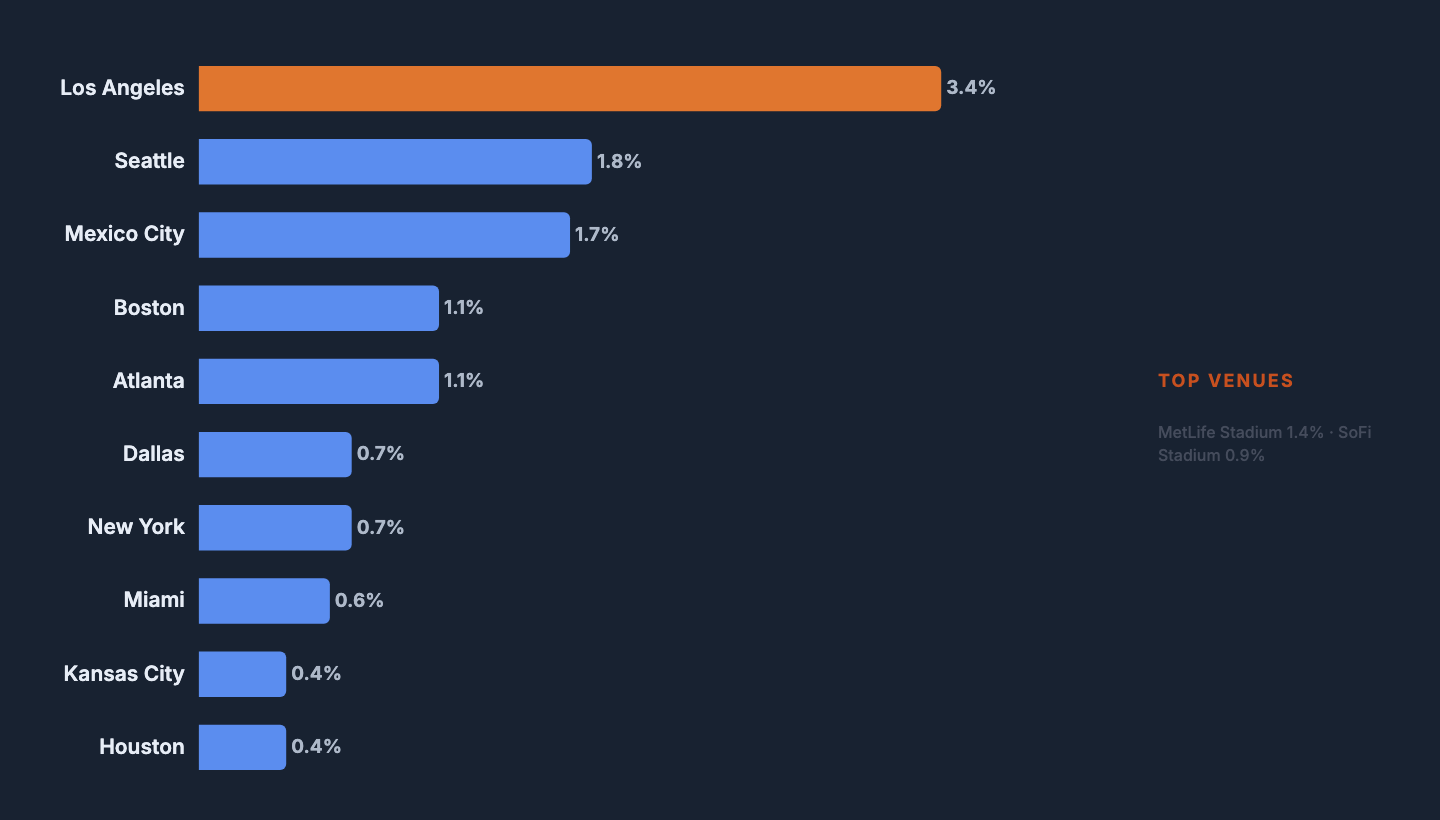
Among host cities, Los Angeles received the most coverage.
05 — The race to be the main character
Ranking individuals rather than teams shows a similar pattern. Lionel Messi led coverage for most of the tournament. Folarin Balogun received little coverage until the knockout rounds, then rose sharply during Team USA’s run, aided by the red-card storyline around the Belgium match, to finish close to Messi. Several non-players also appeared in the ranking, including coaches, FIFA’s president, and a World Cup task-force official.
06 — The Cinderella runs
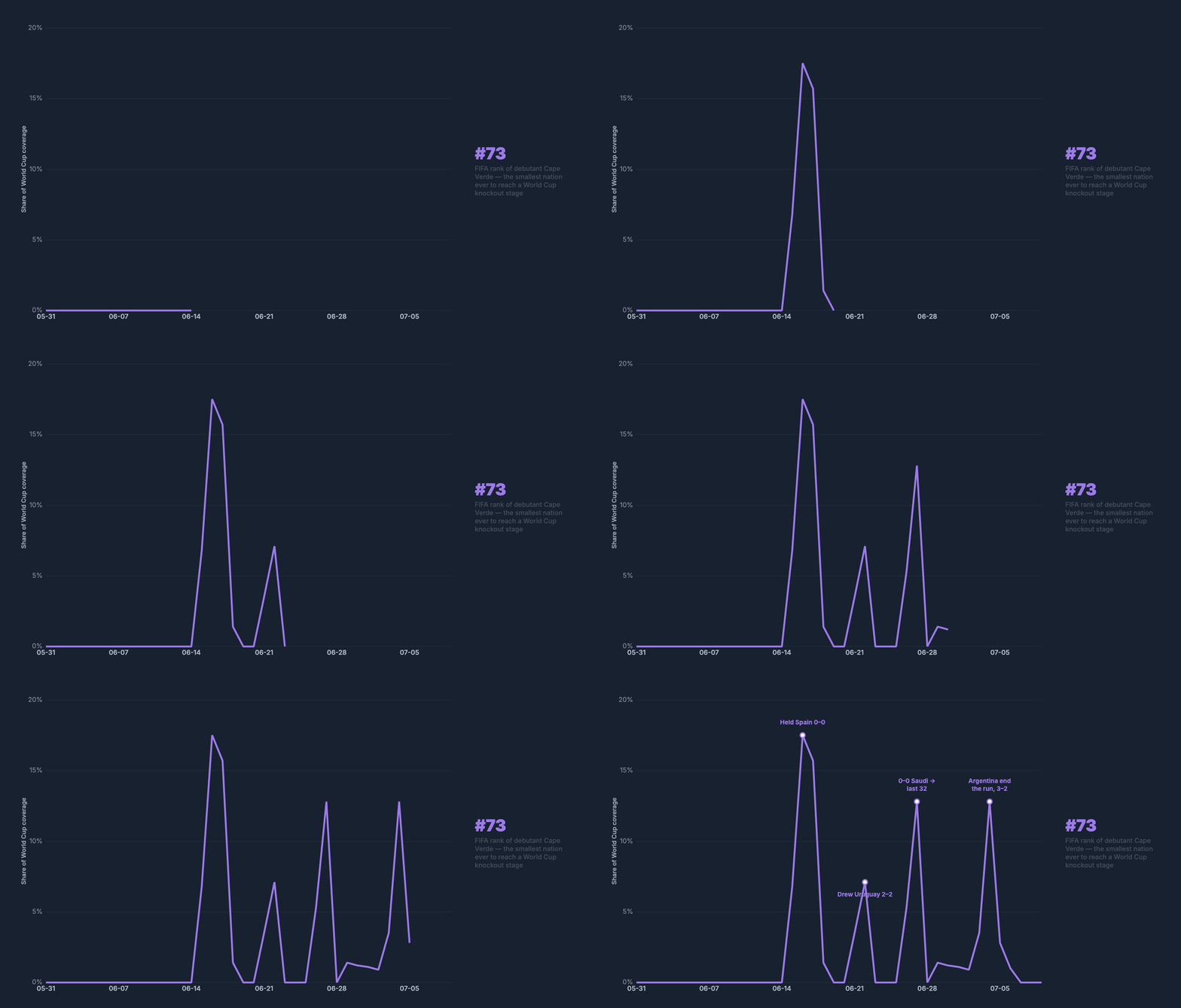
Two underdog teams reached the knockout rounds by different routes and drew coverage as they advanced. Cape Verde, a World Cup debutant ranked around 73rd in the world, drew with Spain, Uruguay, and Saudi Arabia to finish second in its group and reach the last 32 — the smallest nation to reach a World Cup knockout stage. Argentina then eliminated Cape Verde 3–2 in extra time.
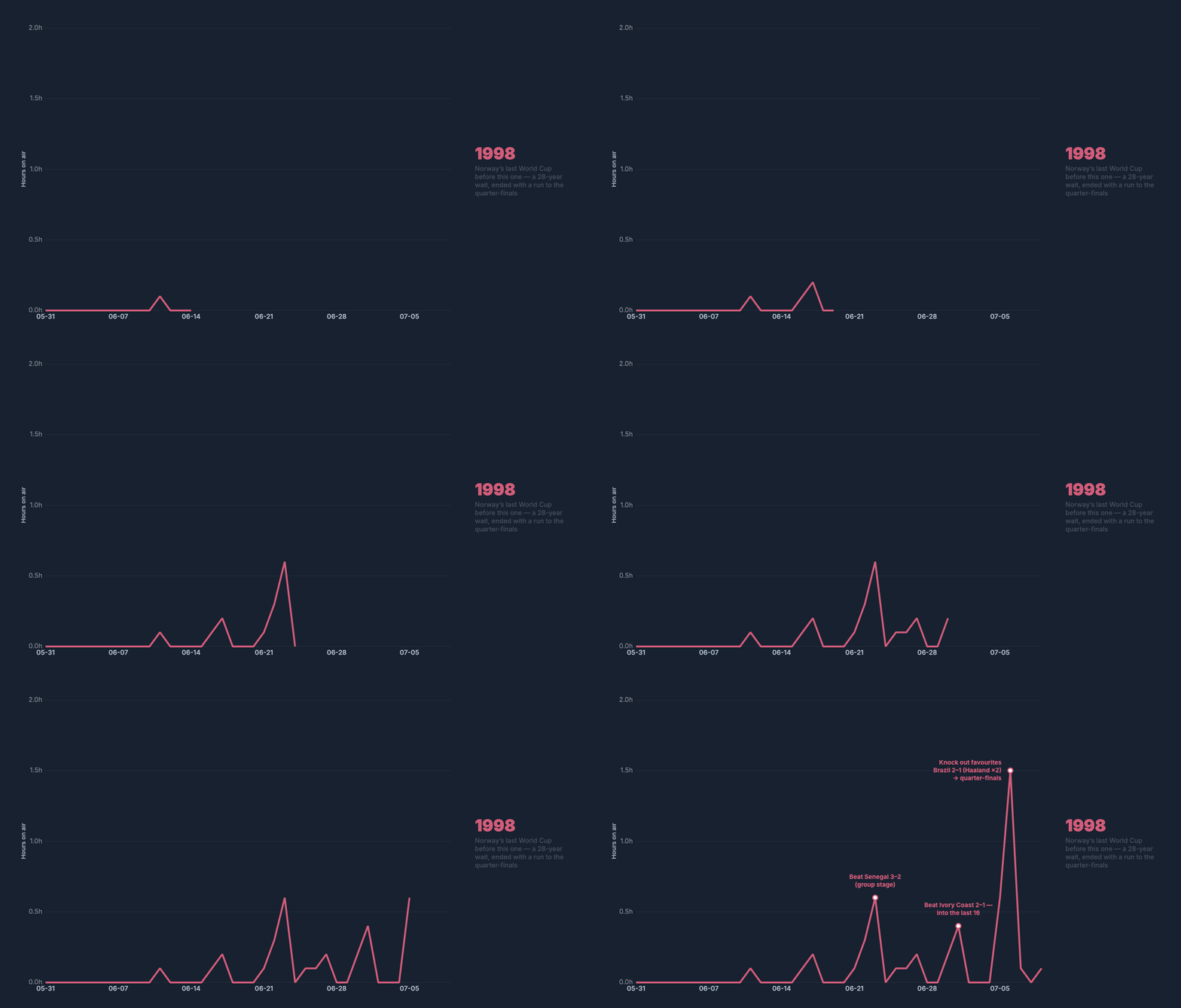
Norway, appearing at its first World Cup since 1998, advanced by winning. It beat Senegal in the group stage, defeated Ivory Coast to reach the last 16, and then beat tournament favourite Brazil 2–1, with Erling Haaland scoring twice, to reach the quarter-finals. Coverage increased at each stage.
07 — More than a sport
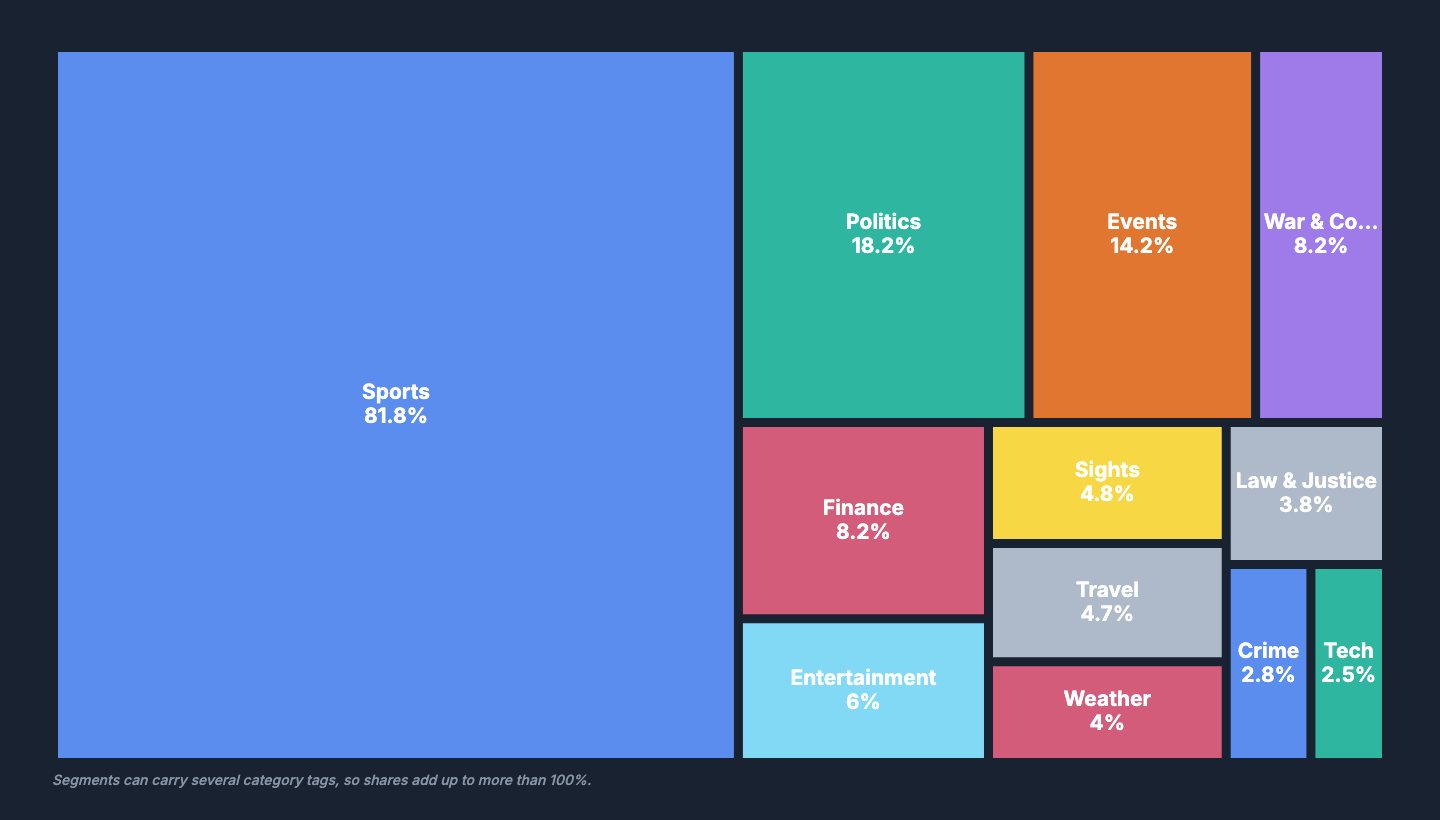
World Cup coverage was not limited to match reporting. It also included business, politics, security, travel, and some unrelated world news. Nearly all coverage was categorized as sport, but a substantial share also touched other categories.
08 — Soccer vs. footballLinguistic tug of war
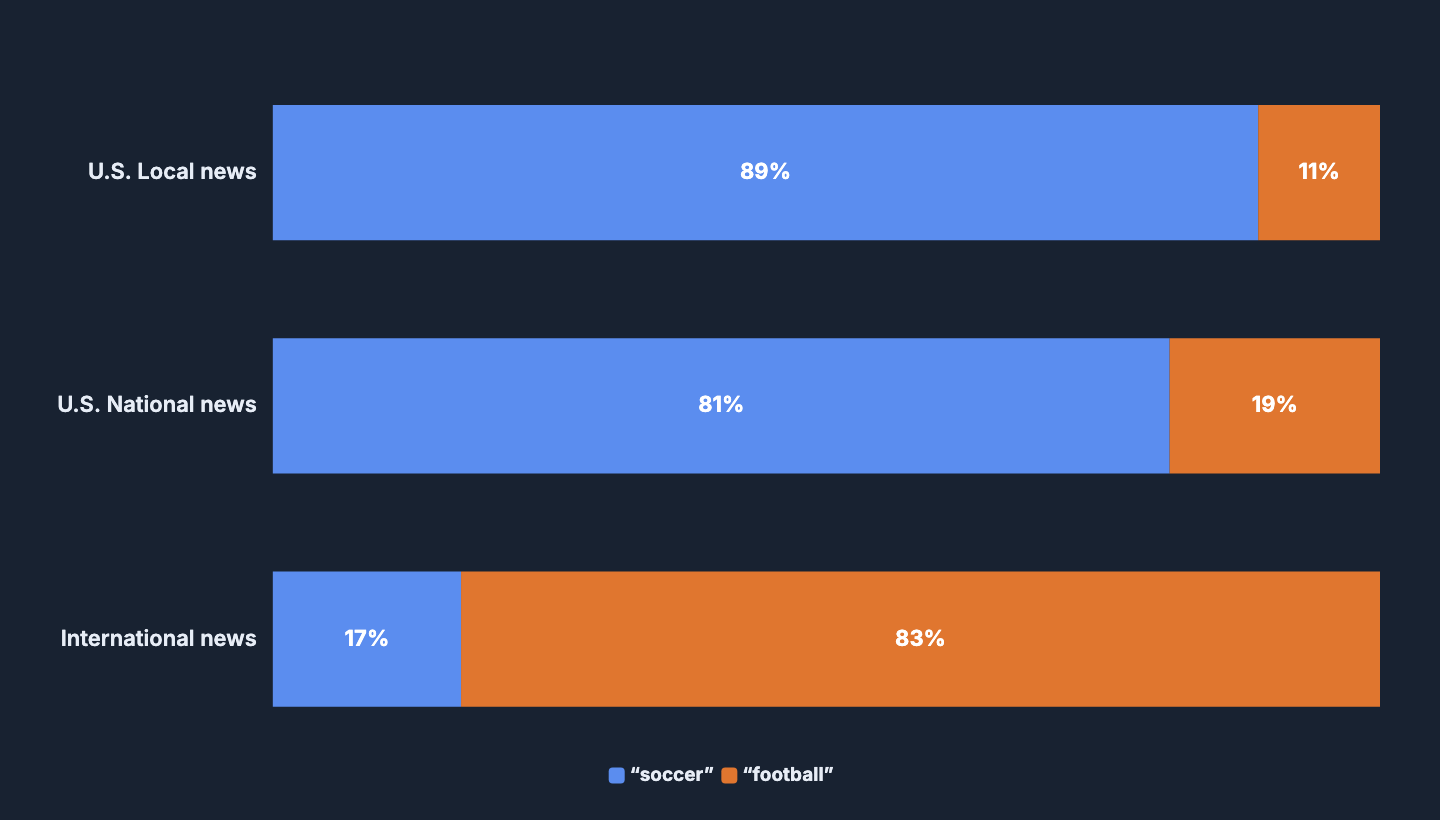
Word choice differed consistently by outlet. U.S. newsrooms used “soccer”; the international-oriented network was the main outlet that used “football.”
09 — The tournament at a glance
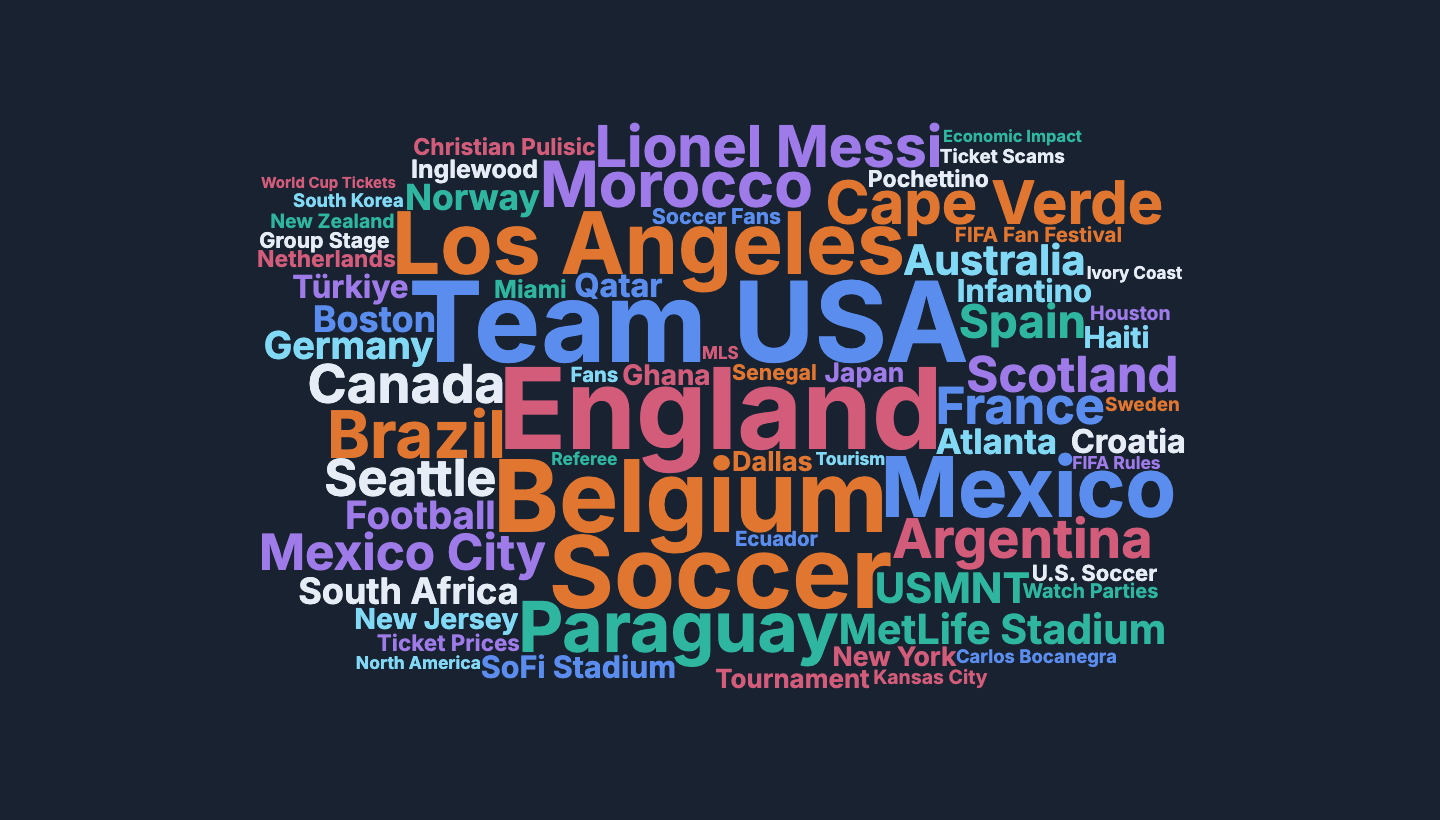
The word cloud below summarizes the tournament’s coverage: teams, cities, venues, and storylines, sized by airtime.
10 — Takeaways: What the coverage shows
A major event like the World Cup can shift an entire news agenda, and measuring it shows how that agenda is set. Over five weeks, coverage was driven less by the quality of the football than by which teams were hosting, which were underdogs, which had played Team USA, and whether local stations were located in host cities.
This analysis comes from reading each news segment for its topic, teams, locations, and tone rather than by genre alone. Anoki Live News applies the same processing to U.S. national and local news continuously.
Anoki Live News reads U.S. national and local news in real time: topic, sentiment, keywords and context, segment by segment. See how it works →
Source: Anoki Live News · May 31 – July 9, 2026 · Coverage grouped as National / Local / International.